


Leave A Message
Leave A Message
If you are interested in our products and want to know more details,please leave a message here,we will reply you as soon as we can.
submit
banner
Home

Blog

Blog

  • FIBCs: Why Are They the Preferred Choice for Bulk Logistics?
    FIBCs: Why Are They the Preferred Choice for Bulk Logistics?
    Nov 28, 2025
    FIBCs: Why Are They the Preferred Choice for Bulk Logistics? The core reason why FIBCs stand out among various transportation equipment lies in their multidimensional advantages, which are particularly well-suited to the needs of bulk material transfer.   Maximizing Transfer Efficiency FIBCs typically have a loading capacity ranging from 0.5 to 3 tons, far exceeding that of traditional woven bags in a single load. When used in conjunction with equipment such as forklifts and cranes, they enable highly efficient “one-lift for one-bag” transfer operations, significantly reducing the number of loading/unloading times.   Compared to the "multiple handlings and piece-by-piece counting" in bulk transportation, FIBCs can increase loading and unloading efficiency by 5 t...
    Read More
  • Precautions for Using Flexible Intermediate Bulk Containers (FIBCs)
    Precautions for Using Flexible Intermediate Bulk Containers (FIBCs)
    Nov 28, 2025
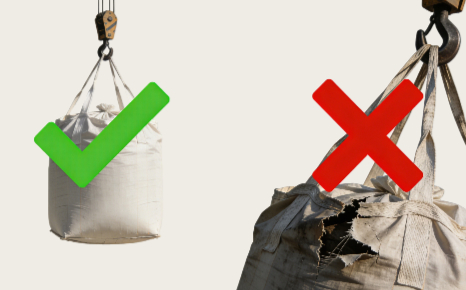
    Precautions for Using Flexible Intermediate Bulk Containers (FIBCs) The standardized use of flexible intermediate bulk containers (FIBCs) revolves around the core principle of "pre-use inspection, proper operation during use, and post-use maintenance." Only by strictly controlling each of these steps can transportation safety be maximized, material loss minimized, the service life of the FIBCs extended, and the goal of cost reduction and efficiency improvement achieved. Before use: Conduct a comprehensive inspection to eliminate potential hazards Before Use: Thorough Inspection is the First Line of Defense for Safe FIBC Operation. Focus on verifying these 3 key points:   1.Bag Condition: Ensure the FIBC has no tears, holes, or broken seams, especially at stitching points and whe...
    Read More
  • How to Choose the Right Flexible Intermediate Bulk Container (FIBC) and Avoid Unnecessary Waste?
    How to Choose the Right Flexible Intermediate Bulk Container (FIBC) and Avoid Unnecessary Waste?
    Nov 28, 2025
    Eliminating Invisible Loss: A Strategic Guide to FIBC Selection and Logistics Optimization In the complex supply chains of the chemical, construction, and food processing industries, procurement managers often grapple with a hidden "cost trap." What appears to be a nominal saving on unit packaging costs often manifests later as significant financial hemorrhage due to transit damage, moisture contamination, or inefficient container utilization.   A Flexible Intermediate Bulk Container (FIBC) is not merely a bag; it is a precision logistics instrument. To navigate this, we must deconstruct FIBC selection through three critical lenses: Material Physics, Spatial Engineering, and Total Cost of Ownership (TCO). Material Physics: Beyond Simple Containment The fundamental structure of...
    Read More
  • Why Do FIBC Prices Vary Drastically Despite the Same Ratio and Weight?
    Why Do FIBC Prices Vary Drastically Despite the Same Ratio and Weight?
    Feb 05, 2026
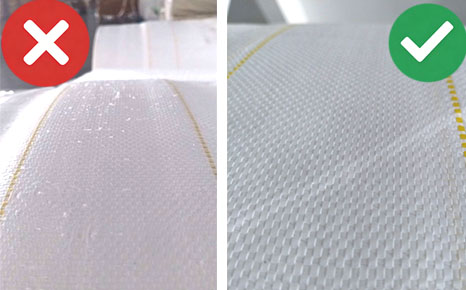
    When purchasing FIBCs, have you ever encountered this confusion: two products appear to have identical formulations and weights, yet their prices differ significantly?    As a FIBC manufacturer with years of deep industry experience, we want to candidly tell you: the core of price differences often lies in the “invisible details of the fabric surface.”   In the FIBC production process, the quality of the raw Heavy Duty PP Woven Fabric Roll is the core component that bears weight and resists abrasion. Its quality directly determines the FIBC’s service life, load-bearing capacity, and operational safety. And fabric quality is the key benchmark for distinguishing “good” from “poor” base fabric.   Fabric Surface Quality: The &ld...
    Read More
  • Safety Specifications for FIBC Lifting, Forklift Operation, and Pallet Stacking
    Safety Specifications for FIBC Lifting, Forklift Operation, and Pallet Stacking
    Feb 27, 2026
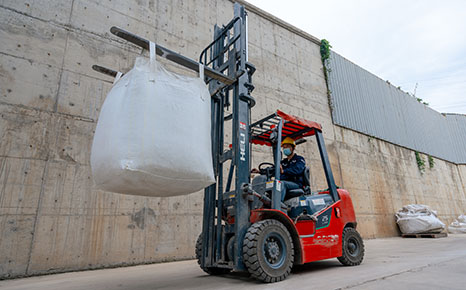
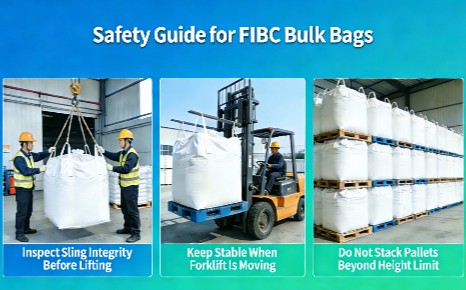
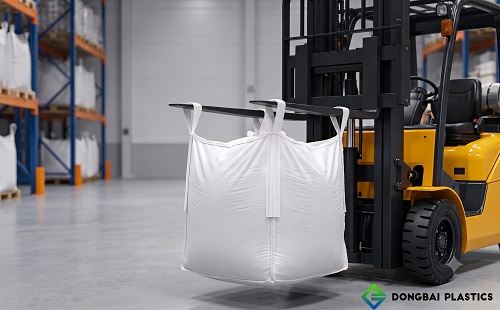
    Safety Specifications for FIBC Lifting, Forklift Operation, and Pallet Stacking:   In the storage and transportation scenarios of bulk goods such as chemicals, building materials, grain, and minerals, FIBCs (Flexible Intermediate Bulk Containers), also known as ton bags, are the preferred choice for efficient and economical unitized packaging.    However, improper operations during lifting, forklift transfer, and pallet stacking can easily lead to bag damage, cargo leakage, equipment damage, and even personal safety accidents.   Based on years of experience in FIBC research & development, production, and on-site service, Fujian Dongbai Plastics Technology co.,Ltd has compiled this set of ready-to-implement safety operation specifications to help enterprises reduce r...
    Read More
  • Which FIBC Baffle Bag is Safest for Your Powders?
    Mar 13, 2026
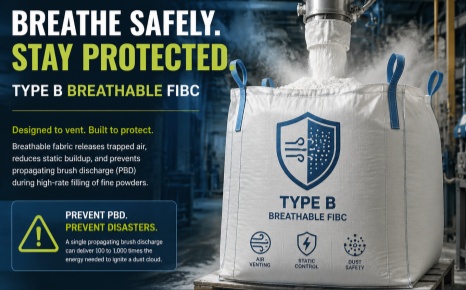
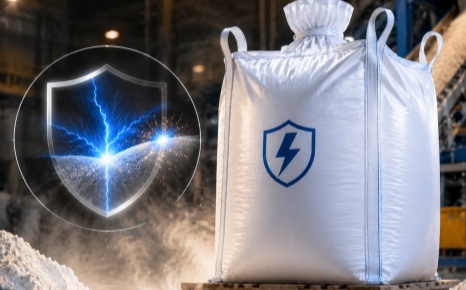
    In powder processing industries—ranging from chemicals and pharmaceuticals to food and minerals—static accumulation is a hidden hazard that procurement and safety engineers must constantly manage. During high-speed filling and discharging operations, intense friction between powder particles generates massive amounts of electrostatic charge. If the surrounding environment contains combustible dust or flammable gases, a single electrostatic discharge (a spark) can trigger a catastrophic explosion.   Faced with complex packaging requirements and stringent safety regulations, procurement teams often feel overwhelmed by the sheer variety of technical specifications on the international market. How do you accurately assess your factory's production environment? When purchasing...
    Read More
  • Gemini said Are You Risking Dust Explosions? How to Choose Between Type B, C, and D FIBC Base Fabrics?
    Mar 20, 2026
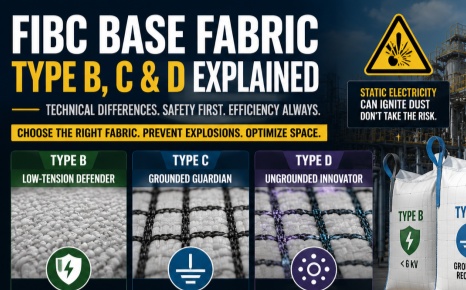
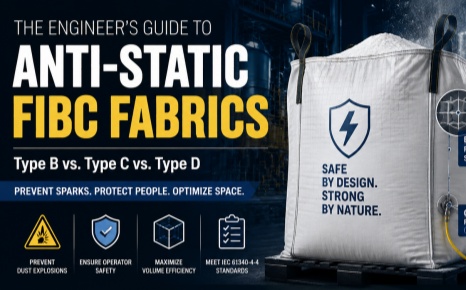
    Handling dry bulk materials inherently generates static electricity. As powders rub against each other and the woven polypropylene during filling and discharging, a phenomenon known as triboelectric charging occurs. In environments handling fine powders, chemicals, or agricultural products, the accumulation of this static charge isn’t just an operational nuisance; it is a critical explosion hazard. Plant managers and procurement engineers often face a technical dilemma when specifying packaging: determining the exact point where standard polypropylene fails and specialized anti-static base fabrics become necessary. Selecting the wrong fabric type can lead to catastrophic combustible dust explosions. To navigate this, the industry relies on the standards set by the International Elect...
    Read More

Leave A Message

Leave A Message
If you are interested in our products and want to know more details,please leave a message here,we will reply you as soon as we can.
submit
Contact Us :export@dbpolyfibcs.com

Home

products

WhatsApp

contact