Leave A Message
Leave A Message
If you are interested in our products and want to know more details,please leave a message here,we will reply you as soon as we can.
submit
banner
Home Blog

FIBCs: Why Are They the Preferred Choice for Bulk Logistics?

FIBCs: Why Are They the Preferred Choice for Bulk Logistics?

November 28, 2025
Mabu

I have over 10 years of hands-on experience in FIBC bulk bags and polypropylene woven packaging, with a strong focus on materials, manufacturing processes, and real-world applications. I work closely with production and logistics teams to improve consistency, performance, and practical usability, and I enjoy sharing insights that make industrial packaging concepts easier to understand.

Mabu

FIBCs: Why Are They the Preferred Choice for Bulk Logistics?

The core reason why FIBCs stand out among various transportation equipment lies in their multidimensional advantages, which are particularly well-suited to the needs of bulk material transfer.


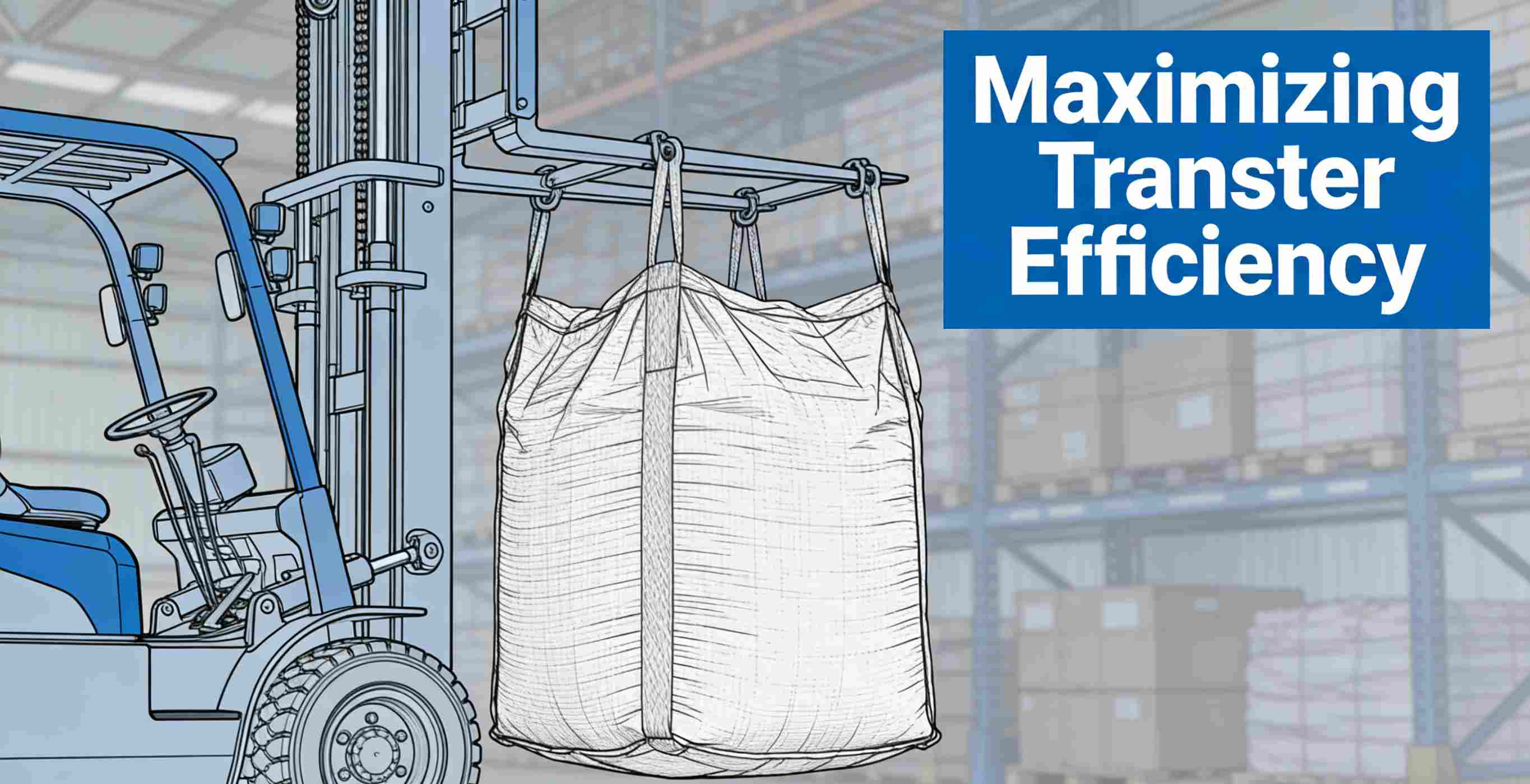
Maximizing Transfer Efficiency

FIBCs typically have a loading capacity ranging from 0.5 to 3 tons, far exceeding that of traditional woven bags in a single load. When used in conjunction with equipment such as forklifts and cranes, they enable highly efficient “one-lift for one-bag” transfer operations, significantly reducing the number of loading/unloading times.


Compared to the "multiple handlings and piece-by-piece counting" in bulk transportation, FIBCs can increase loading and unloading efficiency by 5 to 10 times. They are particularly suitable for high-frequency transfer scenarios such as ports and warehouses, effectively shortening the logistics cycle.

Type C Conductive FIBC with grounding tabs designed to prevent static buildup and explosions in flammable environments.

Optimizing Logistics Costs

From a comprehensive cost perspective, the advantages of FIBCs are highly significant. First, the single large-capacity loading reduces the amount of packaging material required. For industries handling low-density materials like agricultural waste or insulation, opting for a Lightweight PP Woven Bulk Bag can further reduce packaging costs per unit by minimizing unnecessary tare weight while maintaining structural integrity. On the other hand, efficient transfer reduces labor input while also decreasing the loss rate of materials during handling. Moreover, reusable FIBCs further dilute the overall usage cost through multiple cycles of use.


Comprehensive Material Protection

High-quality FIBCs provide comprehensive material protection through rational structural design and material selection. Standard FIBC models prevent the intrusion of external impurities, maintaining material cleanliness. For high-risk environments involving flammable powders or solvents, standard bags pose a static discharge risk. In these scenarios, the Type C Conductive FIBC is the industry standard, featuring interconnected conductive threads and grounding points to safely dissipate static electricity and prevent explosions, ensuring maximum safety during the transfer process.


Classification and Characteristics of FIBCs: Adapting to Different Industry Needs

With the diversification of industry demands, FIBCs have evolved into multiple types, each emphasizing different structural designs, materials, and functions to precisely meet the material handling needs of various industries:

  • Classification by Structural Type

The mainstream structural forms are divided into square and round types. Square FIBCs feature a flat bottom, providing strong stacking stability and maximizing the use of warehouse or vehicle space. Round FIBCs offer even force distribution and excellent stability during lifting, and they are easier to fill via pipes, making them more suitable for transporting materials like chemical powders and mineral granules.


  • Classification by Functional Characteristics

Functional characteristics are a core standard in the classification. Beyond general-purpose bags, specific industries require specialized airflow solutions. For example, the Anti-Mould Ventilated Flexible FIBC is designed with breathable mesh strips, making it indispensable for transporting firewood, onions, or potatoes. This design facilitates air circulation, preventing moisture buildup and mold growth that commonly occurs in standard sealed bags.


  • Classification by Number of Uses


It can be divided into disposable models and reusable models. Disposable models are suitable for export goods or temporary transfers. Reusable models are made of thickened PP woven material with secure stitching techniques and can be used multiple times after passing inspections, aligning better with the development trends of environmental sustainability.

FIBC Type Key Technical Feature Primary Benefit Typical Application
Lightweight Woven Optimized GSM Fabric Cost Efficiency Low-density waste, Insulation
Type C Conductive Grounding Points & Carbon Threads Explosion Proof Flammable Powders, Chemical Plants
Ventilated / Breathable Airflow Mesh Strips Prevents Mold/Rot Firewood, Produce (Onions/Potatoes)
Food Grade Virgin Resin & Clean Room Production Hygiene Compliance Sugar, Flour, Grains


Industry Applications of FIBCs: Penetrating Multi-Sector Logistics Support

Leveraging diverse classifications and comprehensive advantages, FIBCs have deeply penetrated multiple industries. In the chemical industry, conductive bags ensure the safe handling of volatile materials. In the agriculture and forestry sectors, ventilated bags are critical for preserving crop quality during transit. In the building materials industry, square FIBCs efficiently manage the storage and transportation of cement and sand.

Leave A Message

Leave A Message
If you are interested in our products and want to know more details,please leave a message here,we will reply you as soon as we can.
submit
Contact Us :export@dbpolyfibcs.com

Home

products

WhatsApp

contact