



Leave A Message
Leave A Message
If you are interested in our products and want to know more details,please leave a message here,we will reply you as soon as we can.
submit
banner
Home

FIBC Blog

FIBC Blog

  • FIBCs: Why Are They the Preferred Choice for Bulk Logistics?
    FIBCs: Why Are They the Preferred Choice for Bulk Logistics?
    Nov 28, 2025
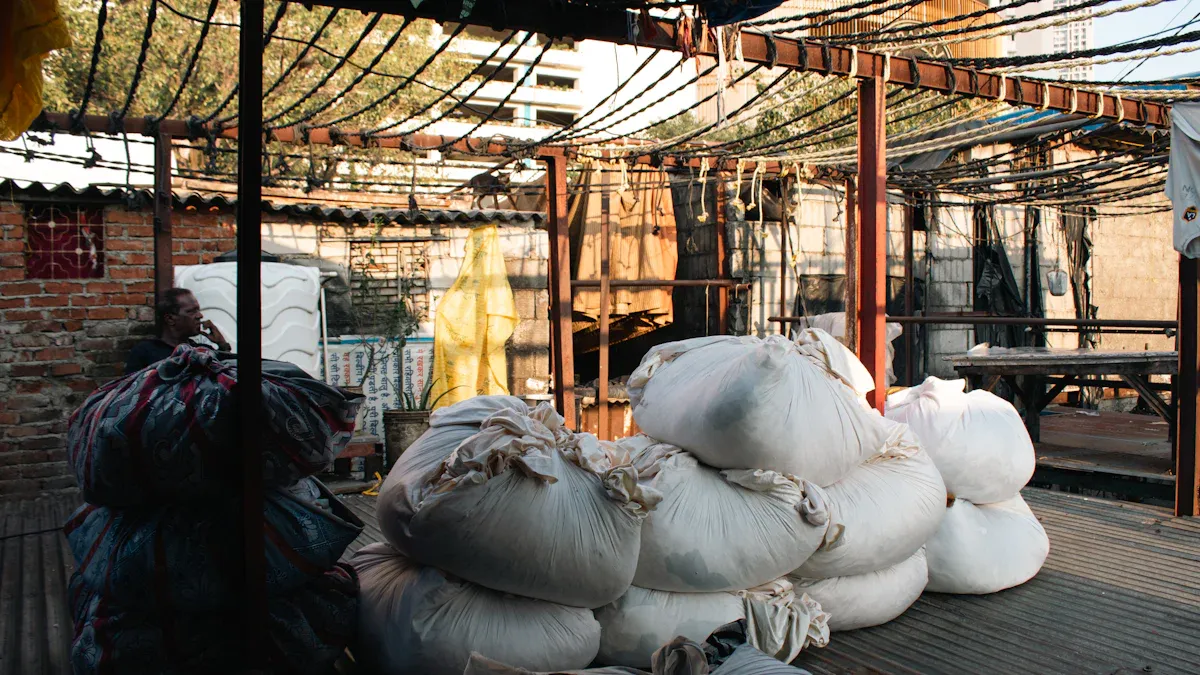
    FIBCs: Why Are They the Preferred Choice for Bulk Logistics? The core reason why FIBCs stand out among various transportation equipment lies in their multidimensional advantages, which are particularly well-suited to the needs of bulk material transfer.   Maximizing Transfer Efficiency FIBCs typically have a loading capacity ranging from 0.5 to 3 tons, far exceeding that of traditional woven bags in a single load. When used in conjunction with equipment such as forklifts and cranes, they enable highly efficient “one-lift for one-bag” transfer operations, significantly reducing the number of loading/unloading times.   Compared to the "multiple handlings and piece-by-piece counting" in bulk transportation, FIBCs can increase loading and unloading efficiency by 5 t...
    Read More
  • Precautions for Using Flexible Intermediate Bulk Containers (FIBCs)
    Precautions for Using Flexible Intermediate Bulk Containers (FIBCs)
    Nov 28, 2025
    Precautions for Using Flexible Intermediate Bulk Containers (FIBCs) The standardized use of flexible intermediate bulk containers (FIBCs) revolves around the core principle of "pre-use inspection, proper operation during use, and post-use maintenance." Only by strictly controlling each of these steps can transportation safety be maximized, material loss minimized, the service life of the FIBCs extended, and the goal of cost reduction and efficiency improvement achieved. Before use: Conduct a comprehensive inspection to eliminate potential hazards Before Use: Thorough Inspection is the First Line of Defense for Safe FIBC Operation. Focus on verifying these 3 key points:   1.Bag Condition: Ensure the FIBC has no tears, holes, or broken seams, especially at stitching points and whe...
    Read More
  • How to Choose the Right Flexible Intermediate Bulk Container (FIBC) and Avoid Unnecessary Waste?
    How to Choose the Right Flexible Intermediate Bulk Container (FIBC) and Avoid Unnecessary Waste?
    Nov 28, 2025
    Eliminating Invisible Loss: A Strategic Guide to FIBC Selection and Logistics Optimization In the complex supply chains of the chemical, construction, and food processing industries, procurement managers often grapple with a hidden "cost trap." What appears to be a nominal saving on unit packaging costs often manifests later as significant financial hemorrhage due to transit damage, moisture contamination, or inefficient container utilization.   A Flexible Intermediate Bulk Container (FIBC) is not merely a bag; it is a precision logistics instrument. To navigate this, we must deconstruct FIBC selection through three critical lenses: Material Physics, Spatial Engineering, and Total Cost of Ownership (TCO). Material Physics: Beyond Simple Containment The fundamental structure of...
    Read More
  • Did You Know Anti-UV FIBC Bags Can Last Twice as Long?
    Did You Know Anti-UV FIBC Bags Can Last Twice as Long?
    Sep 08, 2026
    Picture this: a warehouse full of bulk materials, but the bags holding them crack and fail after just one summer in the sun. Yes, anti-uv fibc bags can last up to twice as long as standard options when exposed to sunlight. When choosing the right packaging, it's essential to understand the differences between various FIBC Bulk Bags to make an informed decision. Standard polypropylene fibc bags typically serve you for 6–12 months under continuous outdoor exposure. UV-stabilized versions extend that service life to 12–18 months or longer. This article demystifies the science behind UV degradation, compares your options, and offers practical tips for maximizing your investment in these big bags.   Key Takeaways Anti-UV FIBC bags last 2 to 4 times longer than standard bag...
    Read More
  • How Custom FIBC Discharge Spouts Can Shorten Bulk Bag Unloading Time?
    How Custom FIBC Discharge Spouts Can Shorten Bulk Bag Unloading Time?
    Sep 04, 2026
    For chemical plants, building material manufacturers, grain processors, plastic compounders, and other bulk-material businesses, unloading a one-ton FIBC is more than a packaging step. It is part of the production cycle. When material flows slowly, bridges inside the bag, spills around the hopper, or leaves a significant residue behind, the lost time is repeated across hundreds or thousands of bags.   A standard bulk bag may be inexpensive to purchase, but its discharge configuration is often designed around general-purpose handling rather than a specific material or unloading system. In practice, the diameter, length, closure method, liner structure, and connection position of the discharge spout can have a direct effect on material flow and operator workload.   For high-volume...
    Read More
  • How Do Specialty FIBC Bulk Bag Specifications Impact Your Material Handling Safety?
    How Do Specialty FIBC Bulk Bag Specifications Impact Your Material Handling Safety?
    Aug 20, 2026
    You protect your plant by choosing Specialty FIBC Bulk Bags. Technical specifications control dynamic hazards during bulk material handling. Proper fibc design eliminates static explosions, sifting leaks, dynamic tip-overs, and overhead drops. Compliance standards like OSHA and ISO 21898 regulate flexible intermediate bulk containers. For instance, ISO 21898 sets a 5:1 safety factor for single-trip industrial packaging. OSHA rules require anti-static fibc bulk bags for flammable powders. You turn bulk packaging into safety equipment by selecting key bulk bag features for every bulk bag load. Physical Parameter Risk Mitigation Strategy Static protection ratings Prevents dust explosions Internal baffle construction Prevents transport tip-overs   Key Takeaways...
    Read More
  • How to Optimize FIBC Filling Spout Specifications for Efficient Bulk Packaging?
    Aug 13, 2026
    In industrial material handling, the efficiency of bulk packaging operations depends heavily on how well the packaging system matches the material and filling equipment. Among the components that deserve more attention is the filling spout of a Flexible Intermediate Bulk Container (FIBC), commonly known as a ton bag or bulk bag. When shape retention and space optimization are required, specialized designs like the Form Stable Baffle FIBC Bulk Bag are often employed.   The bag body determines payload capacity, strength, and overall durability, while the filling spout directly affects material flow, filling speed, dust control, and compatibility with automated equipment. A spout that is too small can restrict material flow and cause bridging, while an oversized spout may create sealing...
    Read More
  • Is a PE Liner Necessary for FIBC Bulk Bags?
    Is a PE Liner Necessary for FIBC Bulk Bags?
    Aug 06, 2026
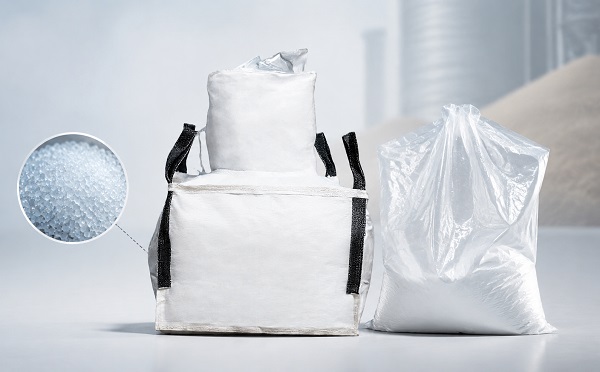
    Is a PE Liner Necessary for FIBC Bulk Bags? When Should You Use PE Lined Ton Bags?   In industries such as chemicals, food, construction materials, agriculture, and minerals, many powder materials have strong moisture absorption characteristics. Common examples include melamine, starch, calcium carbonate, chemical additives, fertilizer powders, and other fine industrial powders. Once these materials come into contact with moisture in the air, they can quickly absorb water, form lumps, deteriorate, or lose their original performance. This problem becomes more serious during long-distance ocean transportation, export shipments, and storage in humid environments. Many buyers often struggle to understand the difference between laminated FIBC bags and FIBC bags with PE liners. They may w...
    Read More
  • Which Type of FIBC Bag Should You Choose for Ultra-Fine Powder Materials?
    Jul 28, 2026
      In the complex and highly demanding ecosystem of modern industrial logistics, the transportation of microscopic particulates presents a rigorous packaging engineering challenge. During the transportation of ultra-fine powders such as fly ash, talc powder, calcium carbonate, and silica fume, the choice of FIBC (Flexible Intermediate Bulk Container) fabric will directly determine critical outcomes: material loss during transit, dust pollution levels in the workshop, and the overall efficiency of on-site unloading.   To maintain structural integrity under immense pressure, the foundational skeleton of these heavy-duty bulk containers is typically constructed from high-tensile PP Woven Fabric, which provides exceptional strength for demanding industrial operations. However, the ra...
    Read More
  • How to Choose FIBC Bulk Bags: Understanding SWL, Safety Factor, and Load Capacity
    Jul 22, 2026
    In the FIBC (Flexible Intermediate Bulk Container) industry, SWL (Safe Working Load) and SF (Safety Factor) are two of the most important technical parameters used in product design, quality inspection, international purchasing, and bulk material handling operations.   However, many buyers, distributors, and even operators still confuse these two concepts. Some believe that a higher safety factor means the bag can carry more materials, while others only focus on loading capacity and ignore the safety rating behind the product.   This misunderstanding can lead to serious consequences, including lifting loop failure, bag rupture, material leakage, equipment damage, and workplace safety risks.   Understanding the difference between SWL and SF is essential for selecting the Righ...
    Read More
  • Can a Forklift Directly Lift a Bulk Bag by Its Lifting Loops?
    Can a Forklift Directly Lift a Bulk Bag by Its Lifting Loops?
    Jul 16, 2026
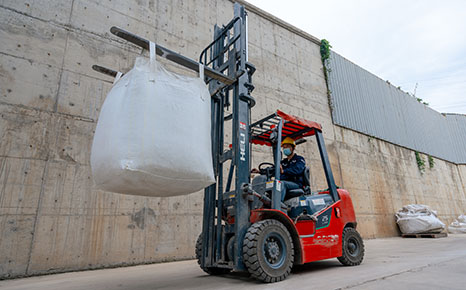
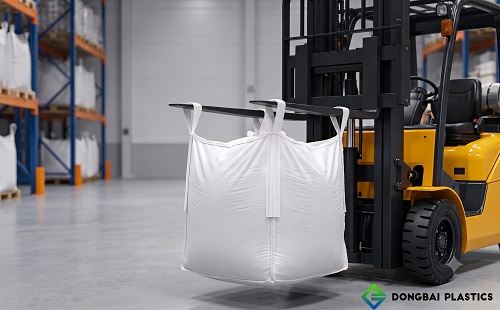
    In industries such as plastics, chemicals, mining, construction materials, agriculture, and food processing, forklifts are widely used for transporting bulk bags in warehouses, factories, and distribution centers.   FIBC (Flexible Intermediate Bulk Container) bags are designed for efficient storage and transportation of dry bulk materials. However, because a fully loaded bulk bag may weigh hundreds or even thousands of kilograms, proper lifting methods are essential to ensure workplace safety.   During daily operations, some workers directly insert forklift forks into the lifting loops of bulk bags for lifting and transportation. Although this method is commonly seen in many facilities, improper handling can cause lifting loop failure, material leakage, equipment damage, and seri...
    Read More
  • How to Choose the Right FIBC Bulk Bag for Chemical Powders?
    How to Choose the Right FIBC Bulk Bag for Chemical Powders?
    Jun 22, 2026
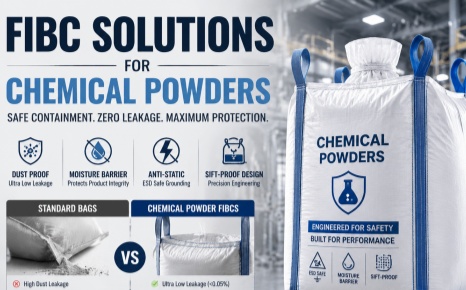
    During the complex stages of production, industrial storage, and cross-border transportation of chemical powders, Flexible Intermediate Bulk Containers (FIBCs) represent the most cost-effective and highly efficient bulk packaging framework available to the modern supply chain. However, this specific packaging node is frequently the most misunderstood and overlooked component by procurement teams. Chemical powders fundamentally differ from standard industrial aggregates or agricultural products. They are typically characterized by an incredibly small particle volume, a notoriously high tendency to generate airborne dust, and severe susceptibility to moisture-induced chemical degradation. Furthermore, many fine chemical powders are highly reactive, possessing flammable or explosive characte...
    Read More
1 2

Leave A Message

Leave A Message
If you are interested in our products and want to know more details,please leave a message here,we will reply you as soon as we can.
submit
Contact Us :export@dbpolyfibcs.com

Home

products

WhatsApp

contact