What Are FIBC Bulk Bags and Why Are They Widely Used for Bulk Material Handling?
September 20, 2026
I have over 10 years of hands-on experience in FIBC bulk bags and polypropylene woven packaging, with a strong focus on materials, manufacturing processes, and real-world applications. I work closely with production and logistics teams to improve consistency, performance, and practical usability, and I enjoy sharing insights that make industrial packaging concepts easier to understand.
David Sterling
FIBC stands for Flexible Intermediate Bulk Container. You know them as bulk bags, big bags, or super sacks. These strong, woven bags help you move sand, chemicals, grains, or plastic pellets across agriculture, construction, and mining. FIBC bulk bags simplify storage and reduce handling costs.
The global FIBC bulk bag market reached USD 5.6 billion in 2024, as reported by Grand View Research.
Key Takeaways
FIBC bulk bags store and move heavy dry materials like sand, grains, and chemicals. They replace many small bags and cut labor costs.
Choose the right FIBC type for static safety. Type D bags need no grounding and stop sparks near flammable powders.
FIBC bulk bags work with standard forklifts and cranes. They stack easily on pallets and fold flat when empty, saving space.
What Are FIBC Bulk Bags?
This section breaks down exactly what an FIBC bulk bag is, the names you might hear, its core characteristics, and the different types available. Understanding these basics helps you select the right bag for your material.
FIBC Acronym Explained
FIBC stands for Flexible Intermediate Bulk Container. The word "Intermediate" means these bags fill the gap between small packaging (like 50-pound sacks) and large fixed silos. You get a portable container that holds one to two tons of dry material. The bag is flexible because it is made from woven fabric. It is a container because it encloses and protects the contents during handling, storage, and transport.
Other Common Names for FIBCs
You will hear many names for FIBC bulk bags across different industries. In construction and agriculture, workers often call them bulk bags or jumbo bags. The term big bags is common on job sites, while super sacks appears in retail and supply catalogs. Regardless of the name, the product remains the same: a large, woven container for bulk dry goods.
Basic Characteristics of FIBC Bulk Bags
Every FIBC bulk bag starts with woven polypropylene fabric. Manufacturers melt polypropylene resin, extrude it into flat tapes, then weave these tapes into a strong, flexible material. This fabric resists tearing, handles UV exposure, and holds up to repeated use.
The most common FIBC bulk bag measures 35 inches by 35 inches by 40 inches (length × width × height). This size gives you about 28 cubic feet of volume and carries a standard safe working load (SWL) of 2,200 pounds.
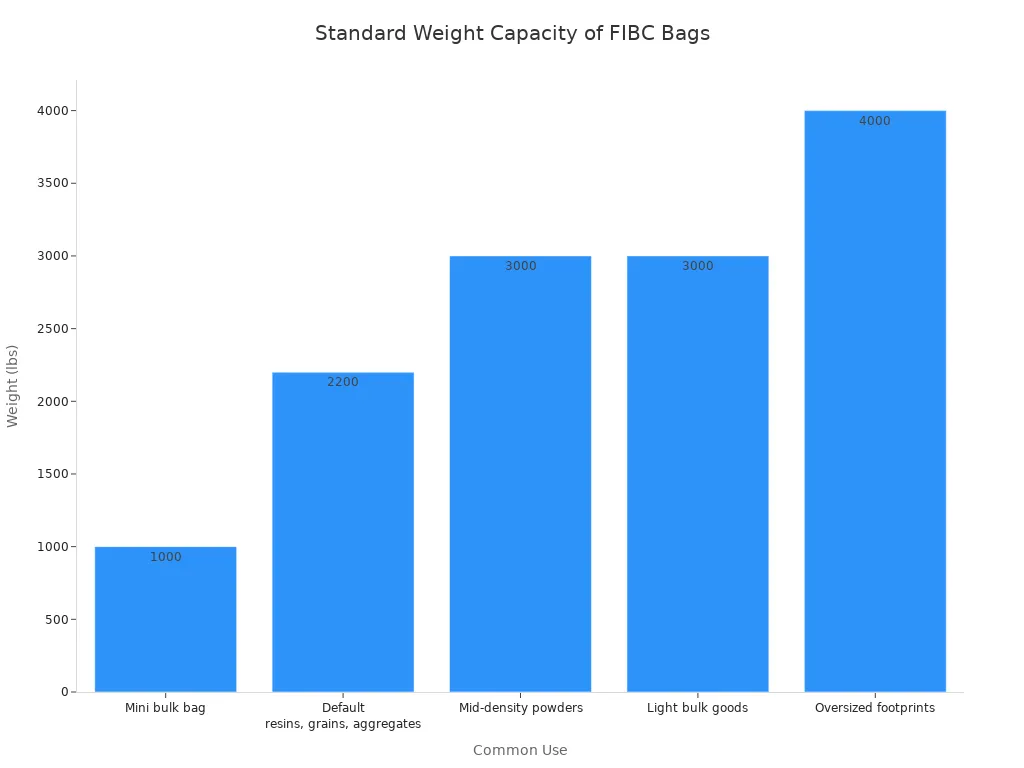
But you are not limited to that size. FIBC bulk bags range from 500 pounds up to 4,400 pounds SWL. The chart below shows typical applications for different capacity ranges.
Most FIBCs fall within a 500–4,400 lb SWL range. For general-purpose powders, granules, and chemicals, the 2,000–3,000 lb range is very common.
The following table helps you match a typical SWL to your material type:
Typical SWL
Common Use
500–1,000 lbs
Mini bulk bag – samples, specialty chemicals
2,200 lbs
Default – resins, grains, aggregates; cube bags for dense aggregates/sand
These characteristics make FIBC bulk bags a versatile choice for many industries.
Types of FIBC Bulk Bags
You must choose the correct type of bag based on the material you handle and the environment around it. The main categories are Type A, B, C, and D. Each type controls static electricity differently.
Type
Static Protection
Grounding Required
Suitable Uses
Type A
None (plain woven polypropylene)
No
Non-hazardous, non-flammable materials in safe environments
Type B
Low breakdown voltage prevents propagating brush discharges (PBD)
No
Dry flammable powders; dust with ignition energy < 3 mJ
For hazardous materials that require extra safety, you might use UN-certified FIBC bulk bags. UN13H1 / UN13H2 bags work for transporting solids that pose environmental or health risks. UN Type B, C, or D bags prevent electrostatic sparks in sensitive environments.
When you understand these categories, you can match the bag design to both the material and the workplace conditions.
Why Are FIBC Bulk Bags Widely Used for Bulk Material Handling?
You see FIBC bulk bags on farms, construction sites, chemical plants, and mines across the world. Their popularity comes from a simple combination: they lower your costs, save your space, adapt to many materials, protect your workers, and work with the equipment you already own. This section explains each advantage in detail.
Cost-Effectiveness in Shipping and Storage
FIBC bulk bags reduce your total cost per ton of material. A single bag carries up to 4,400 pounds. You replace dozens of small sacks with one container. That change cuts your labor hours, your packaging material, and your loading time.
Shipping costs drop as well. A standard 35 x 35 x 40 inch bag holds about 28 cubic feet of product. You fill the bag completely, so you ship less air. Trucks and containers reach their weight limits faster. You pay less per pound moved.
Storage costs follow the same pattern. You stack filled bags several units high in a warehouse. You do not need fixed silos or expensive racking systems. A flat concrete floor works fine. When you empty a bag, you fold it flat and store it in a small space. Reusable FIBC bulk bags last for multiple trips, which spreads the purchase price across years of service.
Space-Saving Design
Empty FIBC bulk bags collapse into a small bundle. You store hundreds of them on a single pallet. That feature gives you flexibility. You order bags when you need them, and you do not tie up valuable warehouse space.
Filled bags also use space well. Their square footprint fits pallets and truck beds without gaps. You stack them two to four high, depending on your material density and bag design. A 10,000 square foot warehouse can hold thousands of tons of product this way.
The design also helps at the job site. You place a bag exactly where your crew needs the material. You avoid double handling and temporary piles. Your site stays organized, and your team works faster.
Versatility Across Industries and Materials
FIBC bulk bags handle an enormous range of dry materials. Common examples include:
Grains
Fertilizers
Chemicals
Sand
Food products
Pharmaceuticals
Different industries rely on these bags for different reasons. The table below shows how six major sectors use them.
Industry
Primary Materials Handled
Common Applications
Special Requirements
Agriculture
Grains, seeds, fertilizers
Storage, transport, processing
Food-grade, moisture protection
Chemical
Powders, resins, additives
Manufacturing, distribution
Static protection, UN certification
Construction
Aggregates, cement, debris
Job site logistics, waste management
Durability, weather resistance
Food Grade
Flour, sugar, spices
Processing, packaging, storage
FDA compliance, contamination prevention
Mining
Ores, minerals, concentrates
Extraction, processing, shipping
Heavy-duty construction, abrasion resistance
Resin
Pellets, powders, compounds
Production, distribution
Static control, moisture barriers
You can customize the fabric, liner, coating, and fitment for your exact product. A food-grade bag uses virgin resin and meets FDA rules. A mining bag uses thicker fabric and reinforced seams. A chemical bag may include a conductive liner. One product family covers all these needs.
Safety Features
Safety separates a good bulk handling system from a dangerous one. FIBC bulk bags offer several built-in protections. Strong lift loops carry the rated load with a safety factor of 5:1 or 6:1. That means a 2,200 pound bag survives a test load of 11,000 pounds or more. Baffles and liners prevent shifting during transport. Discharge spouts give you controlled emptying.
Static electricity is the biggest hidden risk with dry powders. Type A bags provide no electrostatic protection. Charge builds on the fabric surface and can release as a spark. Type D bags solve this problem. They use a quasi-conductive static-dissipative fabric that drains charge through atmospheric corona discharge. The resistance band targets 10⁸–10¹¹ Ω/sq. Discharge energy stays well below 5 mJ, which is under the minimum ignition energy of many flammable powders. Type D bags need no grounding, so you remove the risk of human error during hookup.
Type D performance is verified per IEC 61340-4-4 for surface resistance and discharge energy limits. You get documented safety, not just a claim.
Compatibility with Handling Equipment
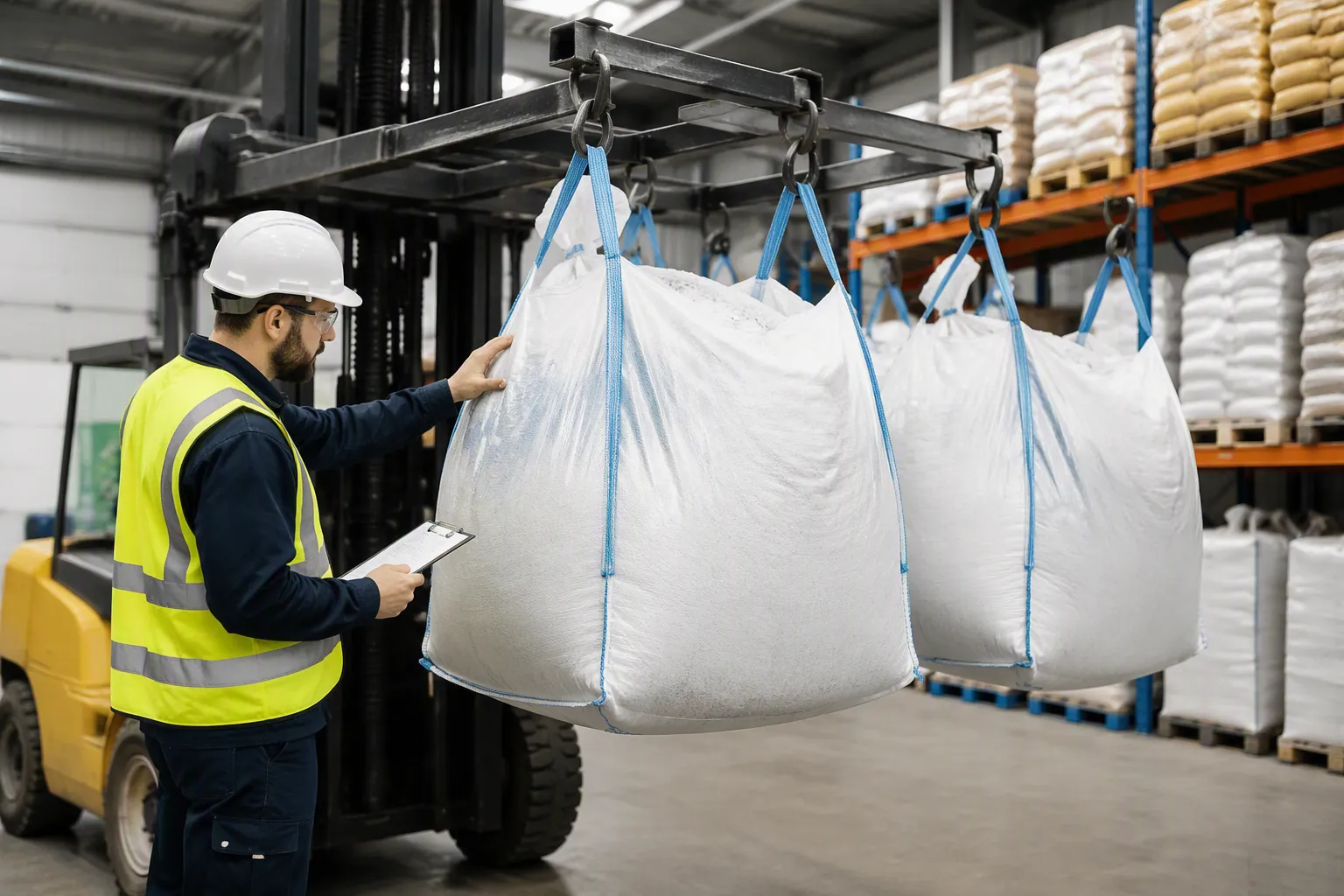
You do not need special machinery to move Heavy Duty FIBC bulk bags. Standard forklifts lift them by the loops. Crane hooks and overhead hoists work too. Many facilities use a dedicated bag lifter that spreads the loops evenly and prevents fabric damage.
Filling equipment is equally flexible. You can fill from a hopper, a screw conveyor, or a manual station. Filling spouts come in different diameters to match your feed rate. Discharge options include flat bottoms, spouts, and full-drop designs. You choose the configuration that fits your process.
This compatibility keeps your capital costs low. Your existing forklift, pallet jack, or crane handles the job. You avoid a large investment in silos, conveyors, or automated systems. That flexibility explains why so many operations switch to FIBC bulk bags.
You can rely on FIBC bulk bags for a practical, economical solution for managing dry materials. They offer customization, reusability, and adaptability. Multi-trip FIBC bulk bags often last 3–5 cycles before refurbishment.
Evaluate your material type, volume, and handling needs.
Choose the right bag type and accessories.
Consult a reliable supplier for proper sizing and safety certifications.
FAQ
How much weight can an FIBC bulk bag hold?
Standard FIBC bulk bags carry 2,200 pounds. Heavy-duty options handle up to 4,400 pounds. You match the bag rating to your material density and volume needs.
Can you reuse FIBC bulk bags?
Yes. Multi-trip FIBC bulk bags typically last 3–5 cycles before refurbishment. You inspect each bag for wear before refilling. Proper storage extends bag life.
Do FIBC bulk bags work with standard forklifts?
Absolutely. You lift FIBC bulk bags with standard forklifts, crane hooks, or overhead hoists. Dedicated bag lifters spread the loops evenly and prevent fabric damage during handling.