Are PP Woven Soft Pallets Really Cheaper Than Wooden Pallets for One-Way Export Shipping?
October 14, 2026
I have over 10 years of hands-on experience in FIBC bulk bags and polypropylene woven packaging, with a strong focus on materials, manufacturing processes, and real-world applications. I work closely with production and logistics teams to improve consistency, performance, and practical usability, and I enjoy sharing insights that make industrial packaging concepts easier to understand.
David Sterling
Yes, for most one-way export shipments, PP woven soft pallets are cheaper than standard wooden pallets — but Standard FIBC Bulk Bags can be even cheaper per unit when used as direct replacements. The table below compares all three options across the six dimensions that matter most.
Dimension
PP Woven Soft Pallet
Wooden Pallet
Standard FIBC Bulk Bag
Material cost
Low
Higher
Lowest
Freight weight
Light
Heavy
Light
Volume
Collapsible
Bulky
Compact
Compliance
ISPM15-exempt
ISPM15 required
ISPM15-exempt
Handling efficiency
Good
Good
Direct load
Return/disposal cost
Minimal
Sunk
Minimal
Total landed cost
Low
Highest
Lowest
The bolded row shows the bottom line for your shipment.
Key Takeaways
PP woven soft pallets cost less than wooden pallets for most one-way export shipments.
Soft pallets are lighter, so you pay less for freight.
Soft pallets avoid ISPM15 treatment fees and delays.
Soft pallets collapse flat, saving storage and return costs.
For free-flowing cargo, FIBC bulk bags are the cheapest option.
Why PP Soft Pallets Win on Landed Cost
Lighter Tare Weight Cuts Freight Charges
Weight drives your freight bill. Ocean carriers and airlines price cargo by chargeable weight, and every kilogram of packaging counts against you. A wooden pallet adds substantial tare weight to each shipment. A PP woven soft pallet weighs a fraction of that amount. You ship the same product, yet you pay for far less dead weight.
Consider a full container of goods on wood. The pallets alone can consume a meaningful share of your payload allowance. Swap in the Flexible PP Woven Soft Pallet and that allowance goes back to your product. On air freight, where rates run several times higher than ocean, the savings multiply fast. You move more sellable goods per shipment at the same freight rate.
This weight advantage compounds across every leg of the journey. Trucking, terminal handling, and final delivery all bill on weight or volume. Light packaging lowers each charge. The result is a lower landed cost before you ever reach the destination port.
No ISPM15 Treatment Means No Compliance Fees
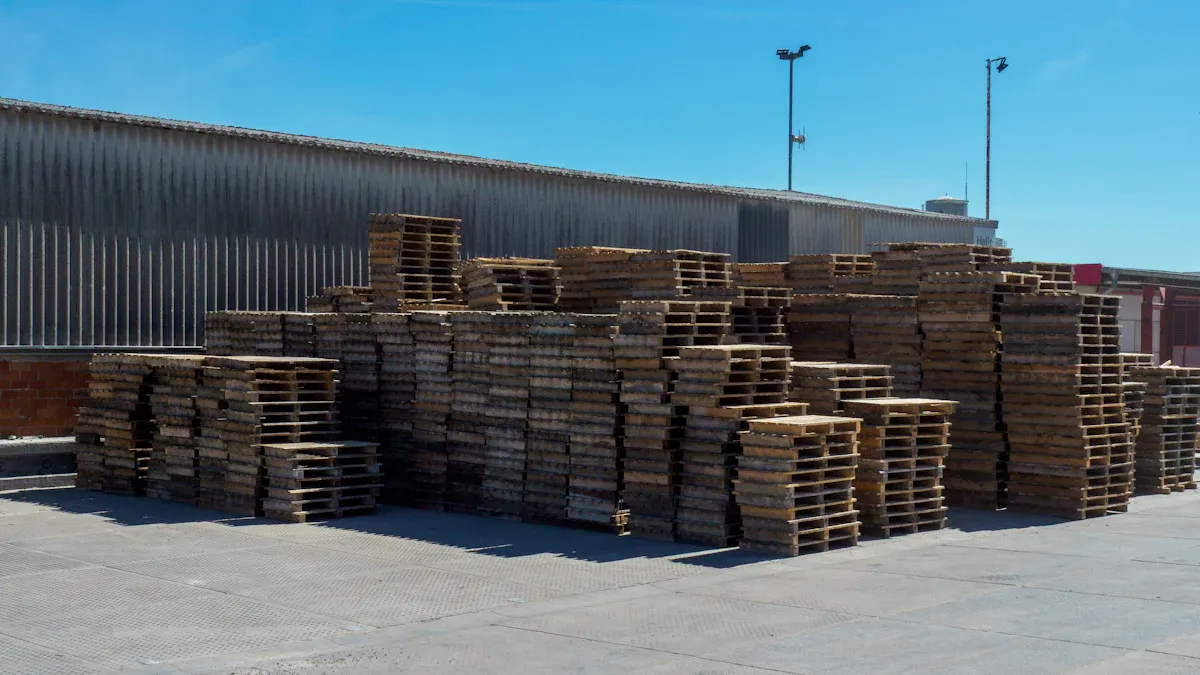
Wood packaging crossing borders must meet ISPM 15, the international standard for phytosanitary measures. That rule forces heat treatment or fumigation before your pallets can travel. The treatment itself carries a price.
Pallet Type
Heat Treatment Cost Premium
Used pallets
$1–$3 more per pallet vs. non-HT stock
New pallets
10–20% more (approx. $4–$8 on a new 48 × 40)
Those premiums stack on top of the pallet price. A new 48 × 40 averages $18.81 per pallet across all treatment types. Grade A used stock lists near $7.90, and Grade B used near $6.00. Truckload orders usually price lower per pallet than single-pallet listings, yet the treatment surcharge remains.
PP soft pallets are exempt from ISPM 15 entirely. They need no heat chamber, no fumigation certificate, and no stamp. You avoid the per-pallet fee and the delay risk that comes with scheduling treatment before departure. A missed treatment slot can push your cargo to the next vessel.
Pressed wood pallets also qualify for the ISPM 15 exemption. They still weigh more than PP soft pallets and carry a higher purchase price. That combination erodes their appeal for one-way export work. When you compare a cost-effective alternative to wood pallets, the soft pallet wins on both weight and compliance.
Plastic pallets offer another route, yet they typically cost more per unit and add return logistics. For a single outbound trip, that math rarely favors them. Your cheapest path stays with soft, ISPM 15 compliant packaging that ships once and disappears into the cargo flow.
The total cost picture becomes clear here. You pay less for the pallet, less for freight, and nothing for treatment. Fewer fees mean fewer surprises at the border. That is how soft pallets protect your margin on every export order.
Collapsible Design and Zero Return Costs
Collapsible Pallets Cut Return Freight and Storage
PP woven soft pallets collapse flat when empty. A stack of twenty soft pallets occupies roughly the same warehouse footprint as a single wooden pallet. This simple geometry changes your storage math. You reclaim floor space that bulky wooden pallets would consume for months between shipments. Your warehouse can hold far more packaging inventory without expanding its square footage.
This collapsible advantage extends to return freight. Suppose you ship goods on a closed-loop route. Your Flexible PP Woven Soft Pallet folds flat, so you load hundreds of units into one small return bundle. The freight charge for that return trip drops dramatically. Wooden pallets demand the same volume on the way back as they did going out. You pay for dead space twice.
Collapsible pallets also reduce handling labor. Workers stack folded soft pallets quickly without pallet jacks or special equipment. This makes the entire cycle more efficient. Less handling time directly cuts operating costs, and fewer storage requirements lower your facility overhead every month.
One-Way Shipping Eliminates Wooden Pallet Returns
True one-way export shipping changes the return calculation entirely. You never see the wooden pallet again. The destination receiver uses it for your cargo, then discards it or sells it as scrap. Return freight for an empty wooden pallet far exceeds the pallet's remaining value. No exporter pays that bill. Every dollar you spent on the wooden pallet becomes a sunk cost, written off with the shipment.
This sunk cost makes pallet pricing deceptive. New wooden pallets sell for $10 to $25 each, and recycled units run $6 to $15. Recycled pallets promise 40-60% savings, but they last only 5-10 trips. When the pallet makes a single one-way export trip, the entire purchase price applies to one shipment.
PP woven soft pallets deliver many more cycles at similar or lower unit cost. Because they survive repeated use, you amortize that purchase price across dozens of trips. Their collapsible form also makes them viable for return loops when you need them. You gain flexibility that wooden pallets cannot match.
For any single-use export, choose the cheapest pallet that survives the trip. That answer rarely swings toward wood. Standard FIBC Bulk Bags can eliminate the pallet layer completely, but where you need a support platform, soft pallets hold the cost advantage. Lightweight PP Woven Bulk Bag options further trim freight weight when your cargo density runs low. You minimize every variable: pallets, handling, storage, and return logistics all point the same direction.
When Standard FIBC Bulk Bags Are Cheapest
Free-Flowing Products Need No Pallet Support
Free-flowing products change the packaging equation. Grains, resins, and powders pour or convey directly into a bag, so they need no platform underneath. You fill the bag, close it, and ship it. The pallet disappears from your bill of materials, and that single change removes an entire cost line.
FIBC bulk bags are used to store and transport large volumes of bulk materials such as powders, granules, agricultural products, aggregates, minerals, and industrial chemicals. They provide a flexible, high-capacity packaging solution that simplifies bulk handling, storage, and freight operations across construction, agriculture, pharmaceutical, and industrial sectors.
The product list is broad. Agricultural commodities such as grains, pulses, oilseeds, and animal feed move in standard Type A jumbo bags. Food powders like proteins, starches, sugars, and milk powders travel in food-grade FIBCs with PE liner inserts. Industrial and mineral powders, salts, and abrasive minerals ship in higher-fabric-weight FIBCs with UV stabilization for outdoor storage. Resins such as crumb rubber use standard FIBCs across many industries. Chemical powders, organic pigments, and pharmaceutical intermediates call for Type C or Type D FIBCs wherever electrostatic discharge risk exists.
Each of these products flows into the bag under its own weight. No forklift slips a pallet beneath it. No worker nails a deck board. The bag itself carries the load from filling line to container to receiver.
This direct-load model also saves on raw materials per ton. A standard FIBC bulk bag holds a large, efficient package, so you move more product with less packaging weight per unit shipped. Fewer packages mean fewer handling touches, lower labor hours, and less warehouse space tied up per ton. The savings compound across the supply chain.
High-Volume Loading Makes the Flexible PP Woven Soft Pallet Optional
High-volume loading shifts the pallet from required to optional. When your cargo is free-flowing and you fill it at volume, the Flexible PP Woven Soft Pallet becomes optional rather than required. You no longer need a support platform under every unit. The bag stands on its own, and the pallet layer vanishes from your cost structure.
This distinction matters for buyers who compare packaging options. A pallet adds value when cargo needs forklift handling, stack stability, or a rigid base. Free-flowing cargo in a well-filled FIBC needs none of those things. The bag's own shape holds the product, and standard lifting loops let a forklift or crane move the unit directly.
Volume amplifies the advantage. Large production runs fill many FIBCs per shift, and each one ships without a pallet beneath it. Your packaging cost per ton falls because you buy fewer components. Your freight cost falls because you ship no wooden tare weight. Your disposal cost falls because you discard nothing at the destination port.
The math favors FIBCs whenever the product flows and the volume runs high. You eliminate the pallet, the treatment fee, and the return question in one move. For these shipments, the cheapest packaging is the bag itself.
Landed Cost by Shipment Profile
Your cargo's physical form decides the cheapest packaging. Two shipment profiles cover most export orders. Each profile points to a different winner. Match the package to the profile, and you cut waste automatically. The right choice depends on whether your goods flow freely or need a rigid base.
Low-volume cargo on pallets favors the PP woven option. You ship a few pallets per container, so unit price matters less than landed cost. Wooden pallets add ISPM15 treatment surcharges and port disposal fees to every export. Ports charge $2–$5 to discard each wooden unit. A folded PP unit takes minimal disposal space. The PP option avoids those penalties, trims freight weight, and prevents splinter damage. Pressed wood units weigh more and carry a higher purchase price. Total cost falls further when you remove the dead weight. Goods arrive intact, so claim-related expenses stay low. For cargo that needs support, the PP option wins.
High-Volume, Free-Flowing Cargo: FIBC Bulk Bag Wins
High-volume, free-flowing cargo changes the equation. Grains, resins, and powders load directly into standard FIBC bulk bags. No pallet sits beneath the unit. You eliminate the platform, the tare weight, and the disposal fee. FIBCs fill quickly at the loading line. FIBCs also reduce handling touches. The bag itself carries the load. Filling at volume pushes per-unit cost down further. Fewer components reduce handling steps and warehouse space. Your actual landed costs drop accordingly. Use an FIBC when the product flows freely and the volume runs high. Free-flowing products do not need a platform; the bag stands on its own. For low-density products, a Lightweight PP Woven Bulk Bag keeps freight volume in check.
The table below shows the winning option under each profile.
Shipment Profile
Winning Option
Why It Wins
Low-volume, supported cargo
PP woven option
Lighter freight, no ISPM15 fee, minimal disposal
High-volume, free-flowing cargo
Bulk bag option
No platform layer, lower tare weight
FIBC Sourcing: Domestic vs. Overseas
Domestic vs. Overseas FIBC Sourcing Cost Factors
Your sourcing location shapes three cost drivers: lead time, freight, and duty. Domestic suppliers ship stock bags in 1–2 weeks. Custom US-made bags typically take 3–5 weeks. Overseas custom orders from India or China take 6–8 weeks for production, plus 1–2 weeks inland transport, 3–6 weeks ocean transit, and 1–2 weeks for port, customs, and delivery. That totals 12–18 weeks. Repeat orders run 10–14 weeks.
The import cost stack adds up fast. Overseas sourcing includes factory price, inland freight to port, ocean freight, marine insurance, brokerage, port handling, and domestic freight from port. Ocean rates swing sharply with market conditions. Duty adds more. Base FIBC duty is 8.4% under HTS 6305.32.0010. Chinese-origin bags may add Section 301 tariffs of 25% or more, pushing the total above 30%. India, Vietnam, and Mexico under USMCA can carry lower or zero extras.
Domestic sourcing avoids ocean freight, customs brokerage, port handling, and marine insurance. You pay only domestic truck freight. No import duty or Section 301 tariff exposure applies.
How FIBC Sourcing Affects Total Landed Cost
Overseas sourcing often lowers unit price. That lower price comes with higher freight and inventory carrying cost. Long lead times force larger planning buffers. You tie up capital in safety stock for months. Distributor stock transfers inventory risk, but custom orders still follow the full import timeline.
Domestic sourcing raises unit price but cuts lead time. Faster lead times reduce the need for large safety stock. Domestic distributor stock can ship in days. You carry less inventory and free up working capital.
For one-way export shipments, the calculus shifts. If the FIBC itself is exported, overseas sourcing may not save money after freight. You pay ocean freight twice: once to bring bags in, once to send them out. The cost tradeoffs favor domestic sourcing when the bag travels overseas as part of your export. Weigh cost, lead time, and quality together. Quality control across sourcing models also matters. Overseas production runs require inspection trips or third-party audits. Domestic suppliers allow faster quality control response. Balance all factors before you commit.
Decision Rules for the Cheapest Export Packaging
Three rules settle the packaging question for almost every export order. Each rule ties your cargo type to one option. Apply the rule that matches your shipment, and you avoid overpaying on any line of the quote.
If Cargo Loads Directly Into FIBC, Choose FIBC
Rule one covers free-flowing cargo. If your product pours, conveys, or flows into a bag at the fill line, choose FIBC. This sourcing path removes the pallet cost entirely. You buy no platform, pay no treatment fee, and discard nothing at the destination port. Your sourcing decision then narrows to bag type and fabric weight.
Standard FIBC bulk bags handle grains, resins, powders, and minerals without a base beneath them. Lifting loops let a forklift or crane move each unit directly. This sourcing choice also cuts handling touches per ton. Fewer touches lower labor cost and warehouse space per shipment. When the product flows and the volume runs high, FIBCs deliver the lowest landed cost of the three options.
If Cargo Needs Pallet Support, Choose PP Soft Pallets Over Wood
Rule two covers cargo that needs a rigid base. Boxed goods, bagged goods, and stacked cartons often require forklift handling. Choose PP woven soft pallets over wood in this case. They weigh less, so freight charges drop. They carry ISPM15 exemption, so treatment fees disappear. They collapse flat, so storage and return freight shrink.
Wooden pallets add treatment surcharges and port disposal fees to every export. That sourcing route also exposes you to delay risk when a treatment slot slips. PP soft pallets avoid each of those costs. Your total cost falls on freight, compliance, and disposal at once. For supported cargo, this sourcing decision protects your margin.
Rule three covers low-density cargo. If your product fills volume faster than weight, consider a lightweight PP woven bulk bag. You then avoid paying freight on empty space. Match the rule to your cargo, and the cheapest option becomes obvious.
Cargo Type
Choose
Main Saving
Free-flowing, direct load
FIBC
No pallet layer
Needs support or forklift
PP soft pallet
Freight, compliance, disposal
Low density
Lightweight bulk bag
Freight volume
Hidden Costs That Change the Math
Damage Risk in Wooden vs. Soft Pallets
Wooden pallets splinter and snag during handling. Those rough edges tear stretch wrap, puncture bags, and scratch finished goods. Every damaged unit becomes a claim against your shipment. You absorb the replacement cost, the paperwork, and the customer friction. Soft pallets carry no splinters and no nails. Their smooth woven surface protects your product through every handling stage. You ship with confidence instead of hoping the wood holds together.
The damage risk also affects worker safety. Loose nails and broken boards cause injuries at the loading dock. Those incidents raise insurance premiums and slow down operations. Soft pallets eliminate that hazard entirely. Your team moves cargo faster without worrying about torn gloves or cut hands. Fewer injuries mean fewer delays and lower workers' compensation claims.
Disposal Fees and Low-Density Cargo Options
Destination ports charge $2–$5 to discard each wooden pallet. That fee applies to every unit you ship. A container holding twenty pallets adds $40–$100 in disposal charges alone. Soft pallets fold flat and take minimal disposal space. Many receivers simply recycle them with the packaging waste stream. You avoid the per-unit fee and the administrative burden of tracking disposal receipts.
Low-density cargo presents another hidden cost. Light, bulky products fill container volume long before they reach weight limits. You pay freight on empty space. Lightweight PP woven bulk bags reduce that wasted volume. Their compact design lets you load more product per container. The freight cost per unit drops because you ship less air. This advantage grows with every shipment.
Standard FIBCs offer similar savings for free-flowing goods. These FIBCs eliminate the pallet layer entirely. You remove the disposal fee, the damage risk, and the tare weight in one decision. For low-density cargo, the FIBC itself becomes the cheapest packaging option. You pay only for the bag and the product inside it.
Review your total cost picture before your next export. Hidden fees and damage claims erode margins quietly. Soft pallets and FIBCs close those gaps.
PP woven soft pallets deliver lower landed cost than wooden pallets for most one-way export shipments. Standard FIBC bulk bags can undercut both packaging options per unit when cargo loads directly. Match the container to your cargo's physical form.
If your cargo can be loaded into FIBC directly, choose FIBC; if it needs pallet support or forklift handling, choose a PP woven soft pallet over wood.
For low-density, free-flowing materials, a Lightweight PP Woven Bulk Bag avoids paying freight on empty space. This decision logic cuts weight penalties, ISPM15 compliance fees, and disposal charges from your total cost. Review your shipment profile once, then commit.
FAQ
Do I need a pallet under every export load?
Many exporters ask whether they need pallets under every load. For free-flowing cargo, you can skip them. Standard FIBC Bulk Bags hold the material directly and remove that cost layer. For boxed or bagged goods, pallets remain necessary for forklift handling.
How much compliance cost does wood really add?
Wooden pallets must meet ISPM15. Exporters pay treatment premiums plus delay risk. Expect roughly $3–$8 per new unit. The Flexible PP Woven Soft Pallet is ISPM15-exempt. You skip the fee, the certificate, and the border delay entirely.
Can I recover the cost of export packaging after arrival?
Wooden pallets usually stay at the destination; return freight exceeds their value. You absorb the full purchase price on one trip. The soft pallet collapses flat, so it can return cheaply or fold into storage. You avoid the sunk cost.
What is the cheapest way to ship low-density material?
Low-density material fills volume before weight. You pay for air unless you reduce package size. Lightweight PP Woven Bulk Bag lowers the billed volume and ships without pallets under the unit. You eliminate the platform, cut freight, and reduce disposal costs.