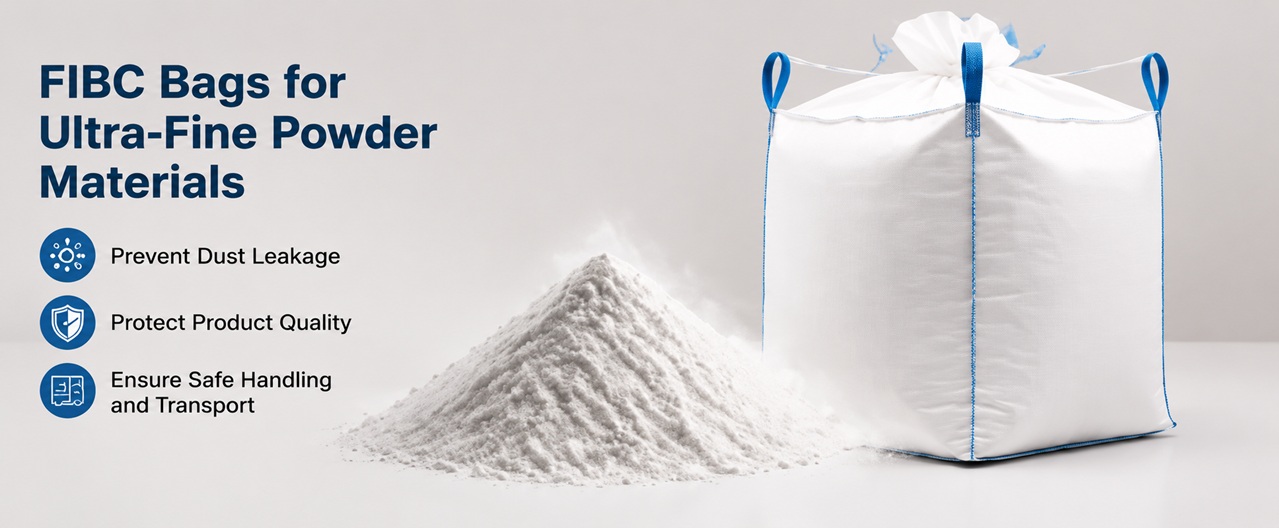
In the complex and highly demanding ecosystem of modern industrial logistics, the transportation of microscopic particulates presents a rigorous packaging engineering challenge. During the transportation of ultra-fine powders such as fly ash, talc powder, calcium carbonate, and silica fume, the choice of FIBC (Flexible Intermediate Bulk Container) fabric will directly determine critical outcomes: material loss during transit, dust pollution levels in the workshop, and the overall efficiency of on-site unloading.
To maintain structural integrity under immense pressure, the foundational skeleton of these heavy-duty bulk containers is typically constructed from high-tensile PP Woven Fabric, which provides exceptional strength for demanding industrial operations. However, the raw tensile strength of the structural webbing is only one part of the equation.
The specific surface treatment applied to this base material entirely dictates its chemical and physical behavior when interacting with different payloads. Currently, the mainstream market is divided into two distinct types of fabrics: coated (laminated) and ordinary uncoated. Despite the stark differences in performance, most purchasers cannot clearly distinguish the applicable scenarios for the two. Selecting the wrong fabric easily causes severe operational problems such as powder leakage, flying dust, and material dampness. By thoroughly comparing the physical mechanics and logistical pros and cons of both fabrics, we can clarify the absolute optimal choice for ultra-fine powders.
The Mechanics and Limitations of Uncoated FIBC Bags
To understand why standard packaging fails under the stress of micro-particulates, we must examine its microscopic architecture. The fabric of uncoated ton bags uses pure polypropylene ordinary woven cloth. During the manufacturing process, flat polymer tapes are heavily interwoven on large circular looms. Inherently, this fabric has weaving gaps, possesses strong breathability, and boasts a low manufacturing cost, with its primary advantage lying in the transport of large granular materials.
For large-particle goods like plastic pellets, sand and gravel particles, and agricultural grains, standard woven bags perform exceptionally well.
- Physical Containment: The physical geometry of these granular materials means that the particles will not seep out from the small weaving holes.
- Aeration and Safety: Ordinary cloth bags are light and breathable, making them not easy to suffer internal moisture and caking when stacked.
- Economic Viability: This makes them highly suitable for short-distance inland transport and low-budget ordinary bulk cargo.
The Fatal Flaw for Powders
Despite its success in agricultural and aggregate sectors, this structure has a fatal shortcoming and is completely unsuitable for ultra-fine powders. The mechanics of ultra-fine particulates behave almost like a fluid.
- Continuous Leakage: The particle size of ultra-fine powder is tiny and can easily penetrate the gaps of the woven cloth. During storage and freight, it is prone to continuous leakage, causing immediate and measurable material loss.
- Environmental Hazards: During unloading, dust flies over a large area, heavily polluting the site environment. Consequently, the customer's factory environmental inspections easily fail to meet strict regulatory standards.
- Moisture and Caking: Industrial powders are often highly hygroscopic. If cargo transport encounters humid weather, water vapor penetrates through the fabric gaps into the bag. The powder is highly prone to absorbing moisture and caking, resulting in an inability to discharge normally.
When production lines halt because silos cannot be fed due to hardened material blocks, it invariably ends up generating large batches of return claims. This cascading series of failures is the main reason why uncoated ton bags are rarely recommended for powder transport.
Laminated FIBCs: The Engineered Seal for Micro-Powders
To mitigate the massive financial and environmental risks associated with breathable woven structures, packaging engineers developed a robust lamination technique. Coated ton bags are created by compounding a layer of PE Plastic Film onto the surface of the PP woven cloth. This advanced extrusion coating process melts the polymer film directly onto the woven substrate. The resulting fabric is entirely sealed without tiny pores, establishing it as the strict standard fabric for ultra-fine powder transport.
Core Logistical Advantages of Lamination:
- Zero Material Loss: The continuous film blocks all weaving gaps, completely eradicating powder leakage from the root. This ensures zero material loss even in rigorous long-distance transport.
- Weather and Climate Resistance: The double-layer sealed structure possesses excellent moisture-proof and waterproof capabilities. When dealing with high salt spray and humid environments, it effectively blocks the intrusion of rainwater and moisture. This avoids the caking of ultra-fine powders and ensures smooth unloading for the customer.
- Strict Dust Control: Concurrently, the coated fabric inherently has a dust-proof effect. There will be no sky full of dust during unloading, which perfectly conforms to the dust environmental control standards of major factories. Because of this compliance, many purchasers explicitly require that powder goods must use coated ton bags.
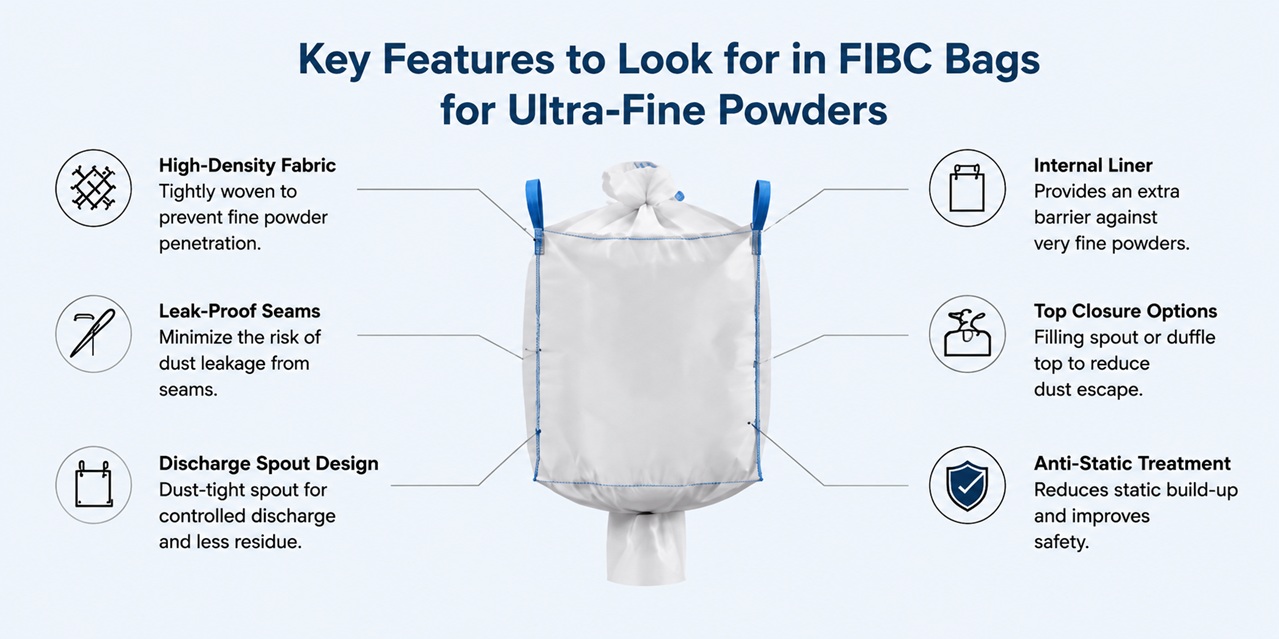
Engineering Customizations for Specific Industrial Powders
Industrial logistics requires nuanced solutions. For different subdivided powders, coated ton bags can be further subdivided and customized to match precise material profiles.
Coating Configurations Depending on the volatility and specific gravity of the contents, manufacturers adjust the coating layers. For ultra-fine micro-powders and easily flying ash materials, double-sided coated ton bags are selected to maximize the sealing effect. Conversely, for ordinary mineral powder and standard fly ash, single-sided coating is entirely sufficient to balance packaging cost and sealing needs.
Discharge Efficiency Coated fabrics also possess an additional mechanical advantage: the fabric surface is incredibly smooth. Because there are no coarse woven valleys for the fine dust to settle into, gravity easily pulls the contents down. After unloading, significantly less residual powder adheres to the bag walls, drastically reducing material waste. At the same time, the bags are easier to clean and recycle, aligning with modern circular packaging environmental policies.
Solving the Aeration Paradox A common technical objection from facility managers transitioning from bare bags is the aeration problem during filling operations. Because modern powders are often pumped with high-pressure pneumatic air, some customers worry that coated fabric has poor breathability, causing gas accumulation and dangerous bulging in the bag.
To strictly address this issue without compromising the seal, manufacturers can install breathable micro-pores and specialized exhaust valves directly on the bag body. This sophisticated engineering retains the sealed and leak-proof performance while quickly expelling the air inside the bag during filling, perfectly solving the breathability problem.
Total Cost of Ownership (TCO) Analysis
Procurement decisions based solely on the initial invoice often lead to catastrophic supply chain overruns. Let us break down the true cost of packaging ownership.
|
Evaluation Metric
|
Standard Uncoated Ton Bags
|
Coated (Laminated) Ton Bags
|
|
Primary Application
|
Large granular materials (plastics, grains)
|
Ultra-fine powders (fly ash, silica fume)
|
|
Fabric Structure
|
Pure PP ordinary woven cloth
|
PP woven cloth + PE plastic film layer
|
|
Dust & Leakage
|
Prone to continuous leakage & flying dust
|
Eliminates powder leakage, inherent dust-proof effect
|
|
Moisture Resistance
|
Water vapor easily penetrates
|
Excellent moisture-proof and waterproof capabilities
|
|
Initial Cost
|
Lower procurement unit price
|
Slightly higher procurement unit price
|
|
Long-Term ROI
|
Low due to massive hidden costs
|
Higher long-term use cost-effectiveness
|
Looking at a comprehensive cost comparison, the procurement unit price of coated ton bags is slightly higher than that of bare cloth bags, but the long-term use cost-effectiveness is indisputably higher. Uncoated bags transporting powder generate massive hidden costs such as material loss, high cleaning fees, customer rework labor, and total return losses. When superimposed, these financial damages far exceed the initial fabric price difference.
Coated ton bags proactively eliminate various after-sales disputes such as powder leakage, moisture damage, and environmental penalties. By permanently neutralizing these operational headaches, suppliers succeed in enhancing customer cooperation satisfaction, naturally resulting in a higher repurchase rate.
Future-Proofing Your Powder Logistics
Safeguarding industrial cargo requires protecting both the internal product from moisture and the external packaging from environmental degradation. For long-duration storage in open rail yards or extensive maritime shipping, intense sunlight and weathering can rapidly degrade standard polymers. Upgrading your bulk packaging to an industrial-grade UV Resistant Waterproof PP Woven Fabric ensures that the physical strength of the bag remains robust, even under relentless ultraviolet exposure and harsh weather conditions.
Combining rigorous UV stabilization with precision lamination guarantees that the FIBC maintains its structural integrity and hermetic seal from the factory floor to the final silo. Securing the proper FIBC architecture is a strategic logistical investment that protects your product yield, ensures stringent environmental compliance, and strengthens long-term commercial relationships globally.
FAQ
1. Can I pack hot powders directly into a laminated FIBC?
Standard PP/PE laminated FIBCs can generally withstand filling temperatures up to 70°C - 80°C. If your powder (such as freshly milled cement or specific chemical powders) exceeds 90°C, standard PE films may soften or melt. For extreme temperatures, you must request specialized heat-resistant liners or polycarbonate variants from your manufacturer.
2. How do I know if I need single-sided or double-sided lamination?
For most industrial applications (like standard fly ash or mineral powders), a high-quality single-sided lamination on the outside is sufficient to prevent moisture and leakage. However, if you are transporting highly volatile micro-powders, easily flying ash, or toxic chemicals, double-sided lamination is strongly recommended to maximize the sealing effect and ensure absolute containment.
3. What should I do if condensation ("sweating") occurs inside the laminated bag?
Because laminated bags are entirely sealed, extreme temperature fluctuations during shipping can cause the natural moisture inside the product to condense on the inner walls. To prevent this from causing your powder to cake, ensure the powder's moisture content is strictly controlled before filling, or consider placing industrial desiccant packets inside the FIBC.
4. Are laminated FIBCs reusable?
While laminated fabrics are easier to clean because of their smooth surface, the reusability of the FIBC depends on its Safety Factor (SF) rating. Bags rated SF 5:1 are designed for single-trip use only. Bags rated SF 6:1 can be reused in closed-loop systems, provided they undergo rigorous physical inspections and tension tests before each refill. However, for ultra-fine powders, single-use is often preferred to prevent cross-contamination.